Changing Buyer Mindset in Global Markets
For decades, tooling procurement was largely driven by one primary metric: cost per tool. Buyers evaluated quotations, compared numbers, negotiated margins, and awarded contracts accordingly.
Today, that approach is rapidly evolving.
Across global manufacturing ecosystems — from automotive and appliances to medical and consumer goods — buyers are shifting from cost-driven sourcing to value-driven tooling partnerships. The change is subtle but significant. The conversation is no longer limited to “What is your price?” but increasingly revolves around “What is your long-term value?”
This shift is redefining how toolmakers are evaluated, selected, and retained.
Why Cost-Driven Sourcing Is Losing Ground
On the surface, selecting the lowest tooling quote may appear commercially sound. However, experienced procurement and operations teams now recognize the hidden variables behind initial cost:
- Tool life consistency
- Maintenance frequency
- Production downtime risks
- Rejection rates and dimensional instability
- Cycle time efficiency
- Responsiveness during modifications
A lower upfront tooling cost can result in significantly higher lifecycle costs. Global manufacturers, especially those operating high-volume production environments, cannot afford uncertainty in tool performance.
As product lifecycles shorten and market competition intensifies, predictability and reliability have become more valuable than marginal price advantages.
What Defines a Value-Driven Tooling Partnership?
A value-driven tooling partner is evaluated beyond commercial competitiveness. Buyers now assess broader capabilities such as:
1. Engineering Depth
Early-stage design collaboration, DFM feedback, simulation capabilities, and problem anticipation are increasingly important. Buyers prefer partners who reduce risk before steel is cut.
2. Process Transparency
Clear project timelines, milestone visibility, documentation discipline, and structured communication are no longer optional — especially in cross-border collaborations.
3. Lifecycle Thinking
Forward-thinking OEMs evaluate tooling performance across its operational life — not just at trial stage. Tool longevity, maintenance ease, and part repeatability matter significantly.
4. Speed with Stability
Global markets demand faster launches. However, speed without engineering stability creates downstream disruptions. Buyers now value partners who can balance acceleration with precision.
5. Risk Mitigation Capability
Contingency planning, quality systems, and proactive issue resolution have become decision-making factors in global sourcing.
Changing Buyer Psychology in Global Markets
International procurement behavior has matured significantly over the past decade.
Several macro factors are driving this evolution:
- Supply chain disruptions have exposed the cost of unreliable partnerships
- Increased quality compliance standards across industries
- Pressure to reduce total cost of ownership (TCO)
- Growing need for technical collaboration across geographies
- Sustainability and material optimization expectations
Buyers are no longer just purchasing tooling. They are securing manufacturing continuity.
In export-oriented markets, especially, tooling partners are often viewed as extensions of internal engineering teams. Alignment, communication discipline, and technical competence now carry measurable weight in evaluation matrices.
Total Cost of Ownership: The New Evaluation Framework
Forward-looking manufacturers assess tooling using Total Cost of Ownership (TCO) principles. This includes:
- Initial tooling investment
- Production efficiency gains
- Scrap reduction impact
- Maintenance and refurbishment costs
- Downtime avoidance
- Tool longevity and scalability
When viewed through a TCO lens, value-driven tooling partnerships consistently outperform purely price-based decisions.
The Role of Indian Toolmakers in This Shift
India’s die and mould industry has undergone a quiet but significant transformation. Toolrooms are investing in advanced machinery, digital simulation, precision metrology, and global quality standards.
As international buyers increasingly seek engineering depth and reliability, Indian tooling partners who position themselves around value creation — rather than cost advantage alone — are gaining stronger global relevance.
The opportunity is no longer just about competitive pricing. It is about delivering measurable performance.
Moving from Transaction to Partnership
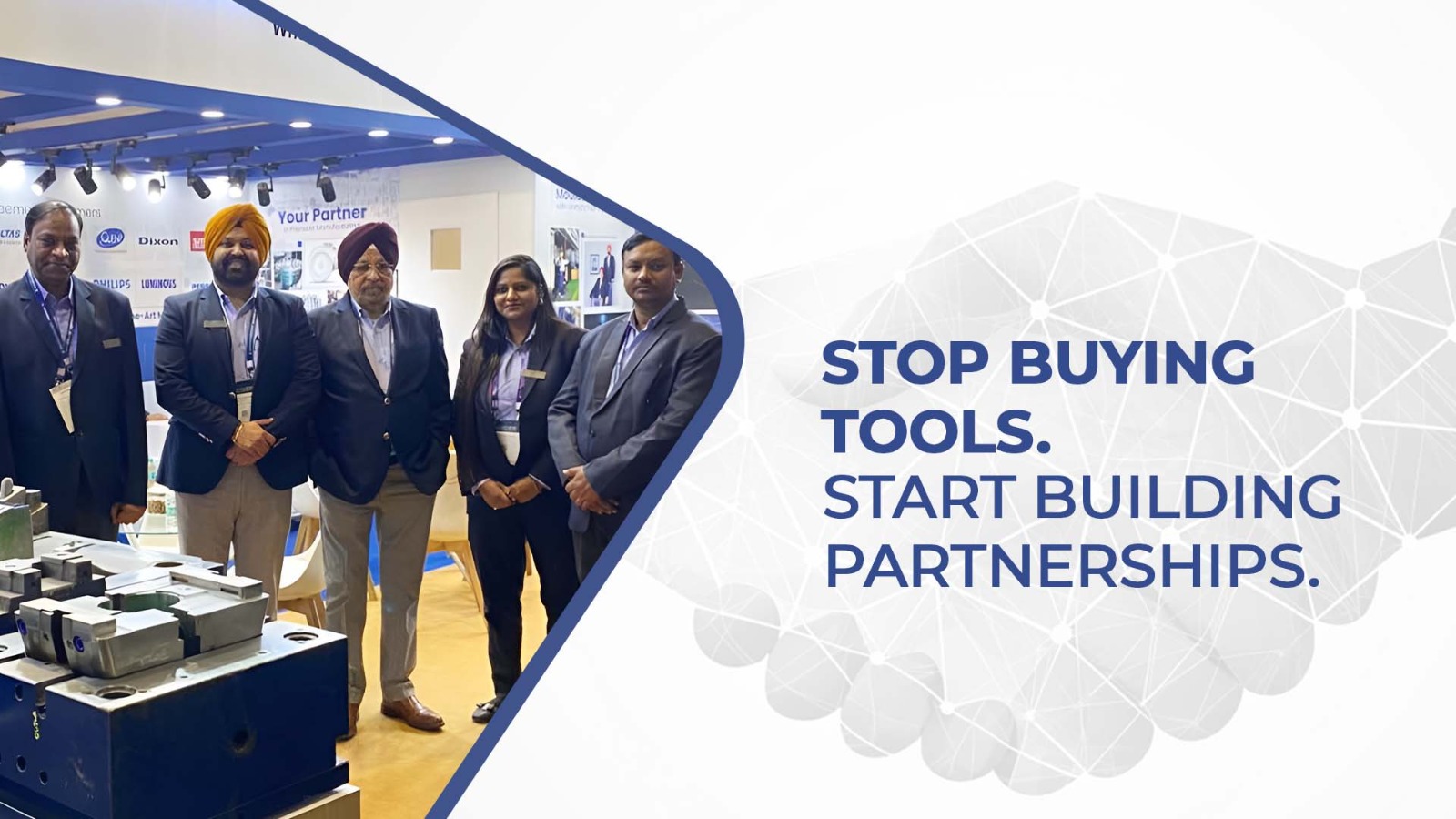
A cost-driven relationship is transactional.
A value-driven relationship is collaborative.
In the transactional model, engagement ends at tool delivery.
In the partnership model, engagement extends across product evolution, modifications, scale-ups, and long-term optimization.
This shift is not a trend — it reflects a structural change in global manufacturing priorities.
For companies that understand this transition, the focus moves toward:
- Building engineering credibility
- Strengthening communication frameworks
- Investing in technical foresight
- Creating long-term trust
A New Era in Tooling Procurement
The global tooling landscape is entering a more mature phase. Buyers are thinking beyond quotations and toward continuity, reliability, and long-term competitiveness.
The question is no longer:
Who offers the lowest cost?
The real question has become:
Who protects our production ecosystem over time?
That distinction defines the future of tooling partnerships.
A Value-Driven Approach in Practice
At Bhurji Supertek Industry Limited, the philosophy has consistently been rooted in engineering-first thinking rather than price-first positioning. The focus extends beyond delivering a tool — it centers on delivering performance consistency, lifecycle reliability, and long-term manufacturing confidence.
With structured project management, precision-led manufacturing processes, advanced validation practices, and disciplined quality systems, the approach is built around minimizing risk and maximizing value for customers operating in demanding global markets.
In an industry where tooling decisions directly influence product quality, operational efficiency, and brand reputation, partnerships must be built on technical depth, transparency, and accountability. That is where value truly begins.
As global buyer expectations continue to evolve, the companies that lead will not be those competing solely on cost — but those committed to protecting and enhancing the manufacturing ecosystems of their partners.



Leave a Reply