Every exhibition feels different.
Not because the venue changes. Not because the industry shifts dramatically in a few
months. But because each participation reveals something new — about the market, about
competition, and often, about ourselves.
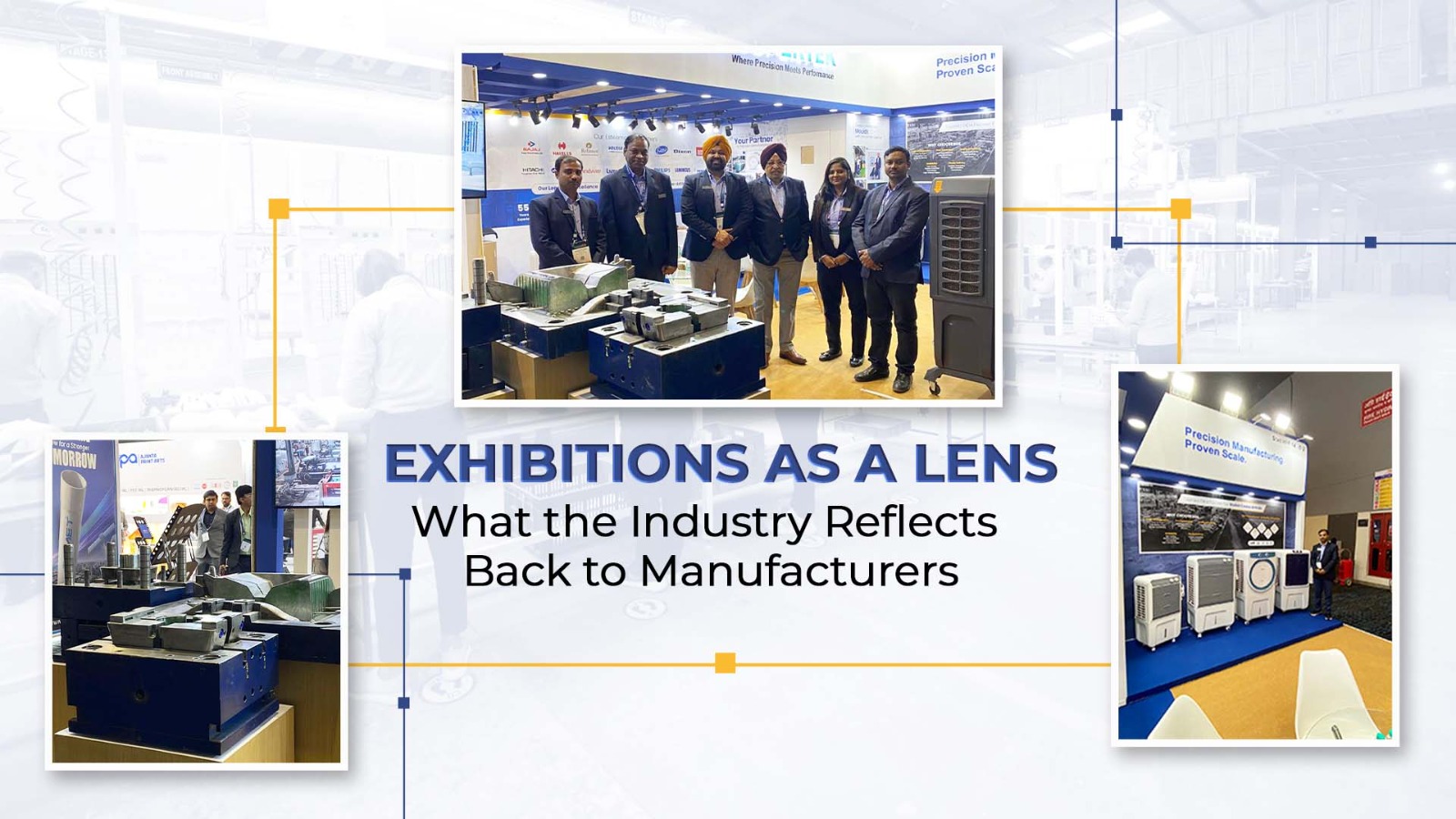
I have always viewed exhibitions as mirrors.
They reflect what the industry values.
They reflect where expectations are rising.
And sometimes, they reflect gaps that need honest attention
What Buyers Reveal Through Their Questions
The most insightful feedback rarely comes in formal meetings. It comes in sharp, unfiltered
questions at the booth.
“How do you ensure balance across cavities?”
“What happens if one gate blocks mid-cycle?”
“How do you control variation over long production runs?”
“What is your preventive maintenance discipline?”
The nature of these questions tells you where the industry focus is shifting.
When conversations move from pricing to process control, from lead times to lifecycle
performance, it signals a maturing buyer mindset.
And that is healthy.
Serious manufacturers welcome difficult questions. Because tough questions indicate
informed customers — and informed customers value engineering depth.
Competition as a Benchmark, Not a Threat
Walking through exhibition halls is always instructive.
You observe how others present their capabilities.
You see where they emphasise automation.
You notice who talks about sustainability, who talks about scale, and who talks about
specialization.
Instead of viewing this competitively, I prefer to see it analytically.
Are we investing enough in process visibility?
Are we communicating technical depth effectively?
Are we evolving fast enough in system integration?
An exhibition environment provides concentrated benchmarking in a way few other platforms
can.
The mirror does not flatter. It clarifies
Market Signals Beyond Conversations
Sometimes, the strongest signals are indirect.
Increased interest in high-cavitation systems.
Deeper technical curiosity around hot runner control.
Greater emphasis on documentation and traceability.
Heightened awareness of energy efficiency.
These are not trends announced in keynote speeches. They emerge organically through
repeated interactions.
When similar concerns surface across multiple conversations, it indicates structural shifts in
industry priorities.
Ignoring those signals is risky.
Acknowledging them is strategic.
Internal Reflection After the Event
For me, the real value of an exhibition begins after it ends.
We review not just enquiries, but discussions.
Not just leads, but learning.
Not just interest, but insights.
Where were we challenged?
Where did we stand firm?
Where did we need stronger data?
Exhibitions expose both strength and vulnerability. That dual exposure is valuable — if one is
willing to reflect honestly.
A Mirror for Culture
Ultimately, exhibitions reflect culture more than capability.
If your systems are robust, discussions feel effortless.
If your processes are unstable, conversations become defensive.
If your team is aligned, messaging remains consistent.
If alignment is weak, contradictions surface quickly.
The industry has a way of sensing seriousness.
Exhibitions simply accelerate that judgment.
For manufacturers who treat exhibitions as photo opportunities, the mirror reveals
superficiality.
For those who treat them as learning platforms, the mirror reveals direction.
And for those committed to long-term engineering discipline, exhibitions become less about
showcasing strength — and more about strengthening what matters.
Because when viewed correctly, the mirror is not there to impress us.



Leave a Reply